

 Tiếng Việt
 日本語
日本語Most CRM content revolves around when to start: signs your business needs a CRM, how to pick the right platform, how to implement it correctly. Very little of it talks about the opposite direction: signs it’s time to reconsider, or even walk away from the system you’re currently using.
Not every CRM stays the right fit forever. A system that was the correct choice three years ago might no longer match your company’s current size, business model, or way of operating. This post is about those signs, instead of repeating why you should buy a CRM in the first place.
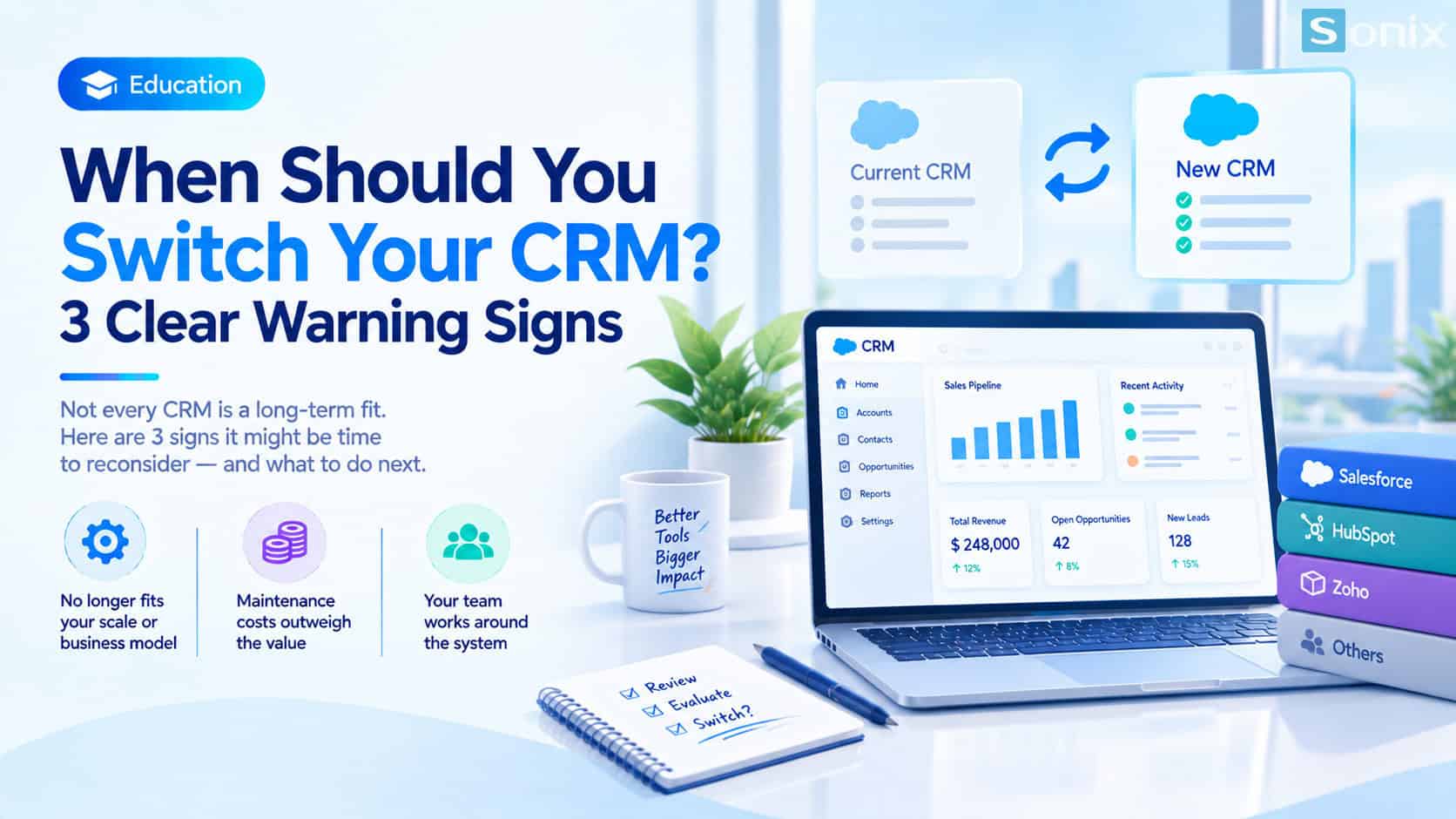
Table of Contents
Context
Why So Few People Talk About Walking Away From A CRM
Most CRM content on the market comes from two sources: vendors wanting to sell more licenses, and implementation partners wanting new projects. Both have a natural incentive to talk about when to get started, not when to stop.
The result is that a lot of businesses keep running a system that’s no longer a good fit, simply because no one ever asked the opposite question: is this still the right choice for the company at its current stage.
Sign 01
The System No Longer Matches Your Size Or Business Model
A CRM chosen for a 5-person sales team with a simple sales process can become either too bulky or too limited once the company has grown to 50 people with multiple product lines. Conversely, a system configured for an old business model may become a complete mismatch after the company pivots to a different one, like moving from one-time sales to a subscription model.
The clearest sign of this is when the team keeps “working around” the system’s limitations by running a parallel spreadsheet, instead of the system actually meeting the real need.
Sign 02
Maintenance Cost Outweighs The Actual Value Delivered
The cost of a CRM isn’t just the monthly license fee. It also includes the time the team spends maintaining it, the cost of outsourcing every time something needs adjusting, and the opportunity cost when the system is slow or complex enough to reduce productivity instead of increasing it.
When the sum of these costs exceeds the actual value the system delivers, like deals closing faster or leads being followed up better, that’s a signal to sit down and run the numbers seriously, instead of continuing just because you’ve already sunk so much into it.
Sign 03
The Team Keeps Finding Ways To Work Around The System
When sales reps proactively set up a separate group chat to discuss deal details instead of logging them in the CRM, or a manager keeps a parallel spreadsheet because they don’t trust the numbers in the main system, this isn’t a user training problem anymore.
This is the strongest of the three signs, because it shows that the very people using the system every day have voted with their actions: the current system isn’t helping them work faster, it’s getting in the way.
Important caveat
Recognizing It Early Is Different From Acting Rashly
Recognizing one of the three signs above doesn’t mean you need to switch systems immediately. Before considering a replacement, ask whether the problem lies with the platform itself, or with how it’s currently configured and used. A lot of “the CRM no longer fits” cases turn out to actually be “the CRM was never properly configured in the first place.”
If, after a thorough review, the problem really is the platform, planning a deliberate transition, with a clear roadmap for data migration and retraining the team, is far better than waiting until the problem becomes too serious to ignore. If you want to picture what a properly configured system can do for a sales team, this piece on Einstein AI in Salesforce (in Vietnamese) is worth comparing against what your current system might be missing.
The question “when should I buy a CRM” has been answered plenty of times. The question asked far less often, but just as important, is: when has the system you’re currently using outlived its usefulness. Recognizing this early helps avoid quietly wasting budget and time for far longer than necessary.
Is your company showing any of these signs?
Book a free consultation, the Sonix team will help you objectively assess whether the problem is the platform or how the system is being used.
Sonix: Your success is our happiness.
Leave us your comment