

 Tiếng Việt
“What do we actually get after 6 months on Salesforce?” is the question Sonix hears most often from SMBs weighing an implementation. Instead of throwing out a vague estimate, this post rounds up figures with clear sources from industry reports, so you have a realistic frame of reference before deciding.
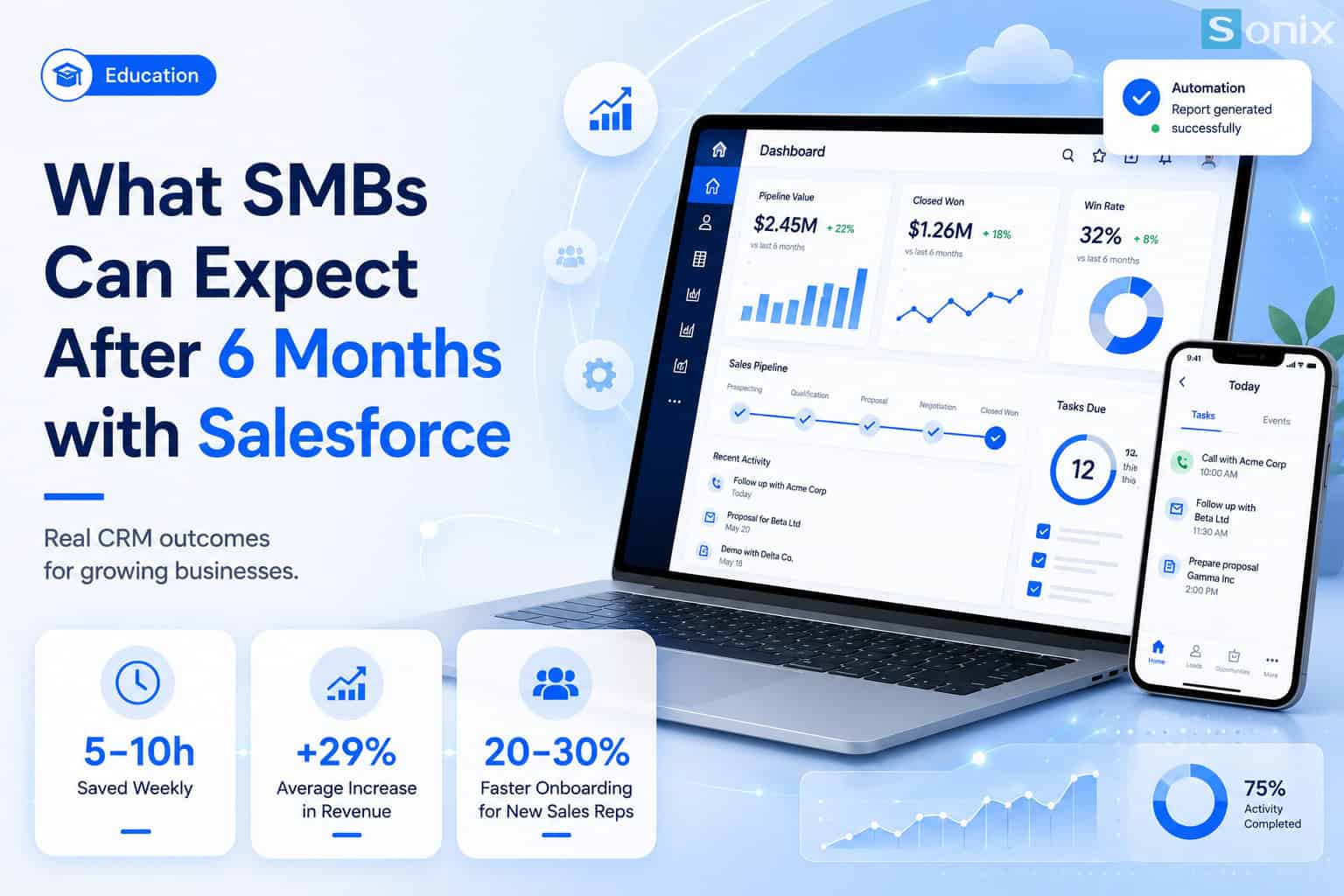
Table of contents
Expectation #1
Reporting time: from manual roll-ups to automatic
At a lot of SMBs, the weekly report is still a matter of pulling data from scattered spreadsheets that each rep updates on their own. This is exactly the kind of repetitive work CRM handles best. According to a roundup by CRM.org, roughly 43% of businesses report that CRM cuts 5 to 10 hours of workload per week, half of that coming from automating repetitive tasks like report compilation.
Forrester research cited by SuperOffice also found the average sales rep spends about 13 hours a week, roughly 28% of their working time, on manual data entry alone. Once most of that gets automated, the weekly report cycle typically shrinks from several hours down to just a few dozen minutes spent double-checking figures, instead of pulling and calculating everything from scratch.
Expectation #2
Revenue and deal close rate
When a pipeline is managed centrally instead of relying on memory or verbal updates between reps, far fewer opportunities get “forgotten” midway, especially during a lead spike. Salesforce reports that businesses using CRM see revenue increase by an average of 29% and sales productivity increase by 34%, according to data cited in Salesforce’s State of CRM report.
That growth doesn’t usually come from landing new customers, it mostly comes from fewer opportunities slipping through the cracks from missed follow-ups, plus automated nudges when a deal has sat idle too long in the pipeline. That’s why the gains tend to be most visible at sales teams that previously had no structured process for tracking opportunities at all.
The common thread in both expectations above: the results don’t come from the software itself, they come from centralizing data and standardizing process, something spreadsheets or individual memory simply can’t do well once a team grows.
Expectation #3
New sales rep onboarding speed
At many SMBs, knowledge of the sales process mostly lives in the heads of senior reps and gets passed down verbally, which means new hires often take weeks to really get up to speed. Once the process is digitized into concrete steps directly inside the CRM, with guidance for each stage, businesses with a clear playbook and training program report ramp-up time dropping by roughly 20 to 30%, according to analysis from Sales Assessment Testing.
Another data point from the same source shows automating administrative tasks cuts roughly 23% of non-selling work during onboarding, freeing up new hires to spend more time actually practicing instead of wrestling with the system itself.
The fine print
The conditions behind these numbers
To be direct: none of these numbers happen automatically just because your company buys a Salesforce license. SuperOffice itself notes that its ROI and revenue-growth figures assume the CRM is properly implemented and genuinely used by the team every day, not just configured once and left alone.
That’s also why most of a good consultant’s work isn’t flipping on features, it’s designing a process the team will actually use daily, instead of quietly drifting back to spreadsheets a few weeks in because the system feels too complex or doesn’t match how they already work.
Salesforce Implementation
Business
Digital Transformation
SME
Sonix Vietnam
Want to know which numbers are realistic for your company specifically?
Industry data is a good starting point, but real results depend on your team size, current process, and how the rollout is handled. Book a free consultation and Sonix will help you estimate expectations that actually fit how your business operates.
Sonix – Your success is our happiness.
Leave us your comment