

 Tiếng Việt
 日本語
日本語Among the questions SMBs ask when considering Salesforce, there’s one that rarely gets asked directly but has a big impact on the decision: how long is the contract commitment, and what happens if you want to stop midway? A lot of business owners are wary of signing a long-term contract with a software vendor for fear of being locked in, yet hesitate to ask because they’re not sure where to start.
The short answer: the specific terms depend on the plan you choose, the number of users, and how the contract is negotiated, so there’s no single answer for every business. What you can do is know in advance which points to clarify before signing, instead of assuming.
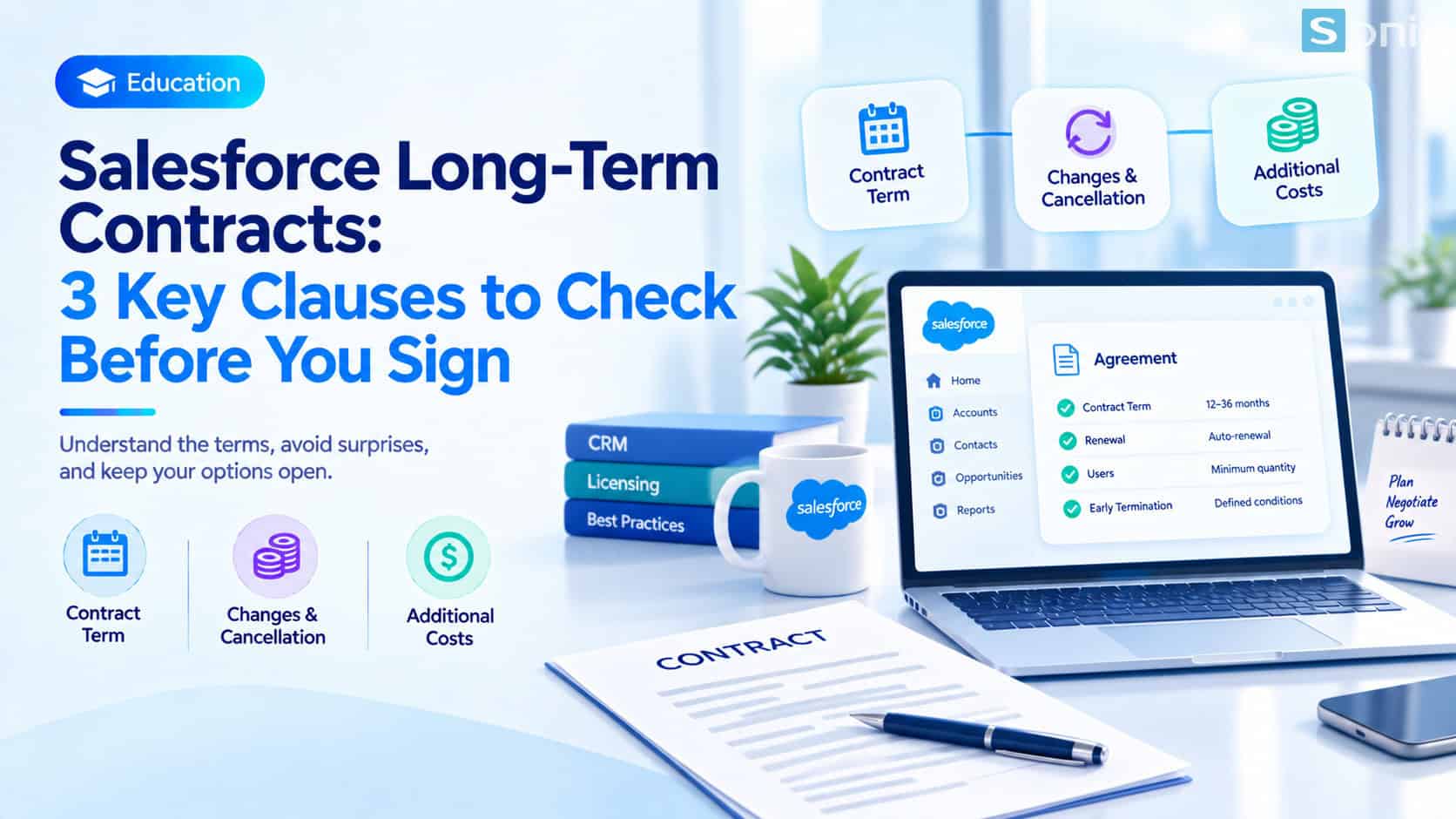
Table of Contents
Context
Why The Contract Question Is Rarely Asked But Really Matters
When researching a CRM, most of the time goes to features, interface, and price per user per month. Contract terms usually come last, once the decision is nearly made, and by then raising difficult questions can feel like slowing things down.
But those very terms determine how much flexibility the business has for years to come: if needs change, if the sales team shrinks or grows, or if the system doesn’t fit as expected, how many options do you have and at what cost.
The general picture
How Salesforce Typically Handles Pricing And Commitment
According to third-party pricing aggregators and licensing advisors, most Sales Cloud editions are sold on annual billing, meaning you commit to paying for the whole year even though the advertised price is quoted per month. A few of the lowest-tier plans may be more flexible, but the popular plans for growing businesses typically come with annual commitments.
Multi-year contracts are also fairly common, usually paired with better pricing than signing year by year. This is worth weighing carefully: an attractive discount can come with being locked in longer, especially if you’re not sure your needs will stay the same over the next few years.
An important note: this is a general picture compiled from reference sources, not the official terms applying to any specific business. Real terms always live in the Order Form you receive, and can vary by region, plan, and how the deal is negotiated.
Terms to ask about
3 Terms To Clarify Before You Sign
The minimum commitment term
- Ask clearly whether the contract is monthly, annual, or multi-year, and how the price changes between options
- Ask whether the contract auto-renews, and if so, for what term
- Ask whether there’s a minimum number of users required, since some products have this rule
- Note the expiration date and the last day you can give notice of non-renewal, so you’re not caught off guard when the contract rolls over automatically
Conditions for changing or canceling midway
- Ask clearly whether you can reduce license count mid-term if the team shrinks, since several advisory sources say this is typically restricted
- Ask about the conditions for canceling early, if allowed, and exactly how notice must be given
- Ask about upgrading or downgrading plans mid-term, since upgrading is often easier than downgrading
- Size your initial license count to actual need rather than overbuying on the assumption you can reduce later
Extra charges for exceeding or stopping early
- Ask what rate applies if actual users exceed the registered count, the negotiated rate or the list price
- Ask when the overage is calculated and billed, for example at the end of the contract term or monthly
- Ask about any fees for stopping before the term ends, and whether any of the fees already paid are partially refundable
- Ask whether the price can increase at renewal, and whether any cap on increases is stated in the contract
The distinction
Your Salesforce Contract vs. Your Implementation Partner Contract
One easy point of confusion is treating “the Salesforce contract” as a single document. In practice, there are usually two separate agreements: one is the software license signed with Salesforce or through a distribution channel, the other is the implementation and support services contract signed with a partner like Sonix.
These two documents have completely independent terms, termination conditions, and pricing structures. A long-term commitment with one party doesn’t automatically mean you’re locked in with the other, so when evaluating flexibility, look at each contract separately rather than lumping them together.
Checklist
A Checklist Of Questions Before Signing
- ☐ What’s the minimum commitment term, and is it monthly or annual?
- ☐ Does the contract auto-renew, and when’s the deadline to give notice of non-renewal?
- ☐ Is there a minimum user count requirement?
- ☐ Can license count be reduced mid-term, and under what conditions?
- ☐ What rate applies to users beyond the registered count, and when is it billed?
- ☐ Are there any fees or penalties for stopping before the term ends?
- ☐ Can the price increase at renewal, and is there a stated cap?
- ☐ Does the implementation services contract with the partner have its own separate termination terms?
This post is general reference, not legal advice. Specific terms always follow the actual contract you receive, and for high-value contracts, it’s worth having a lawyer or someone with the right expertise review it before signing.
If you’d like to get hands-on with the system before committing to any terms, the Salesforce Sales Cloud setup guide in 10 minutes is a good place to get familiar before deciding.
Reading through CRM contract terms and want an objective second opinion?
Book a free consultation, the Sonix team will walk through the points worth clarifying before you sign, so you’re not locked in unintentionally.
Sonix: Your success is our happiness.
Leave us your comment