

 Tiếng Việt
 日本語
日本語A modern smart building usually comes fully equipped: sensors, AI cameras, card-based access control, and a BMS managing electricity, water, and air conditioning in real time. But when a resident notices their AC is broken, they still do exactly one thing: message the front desk on Zalo.
This paradox is more common than most people realize. Most of the investment that goes into “smartening up” a building concentrates almost entirely on the device layer, while the people layer, how residents, tenants, owners, and contractors interact with building management, still runs exactly like it did ten years ago: by phone, personal chat, and spreadsheets.
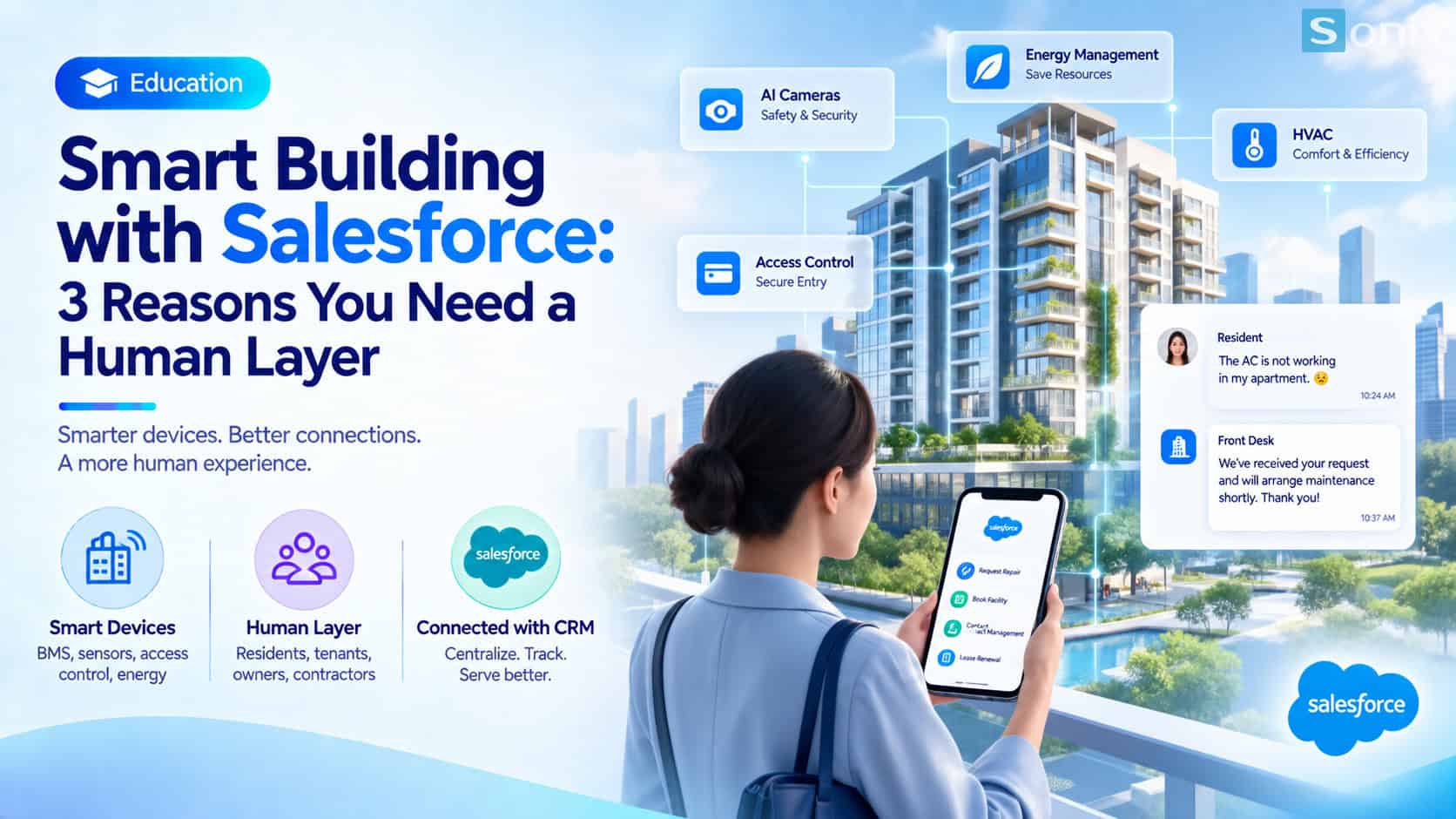
Table of Contents
Context
Smart Building Today Mostly Means The Device Layer
When people talk about smart buildings, most documentation and solution providers revolve around three main areas: building management systems (BMS) controlling power, water, and air conditioning; access control via card readers or facial recognition; and energy-saving solutions built on sensors and real-time data.
These are all genuinely valuable investments, making the building run more efficiently and cutting energy costs. But they share one thing in common: they all solve the relationship between people and devices, not the relationship between people and each other throughout the building’s operations.
The gap
The People Layer: A Gap Rarely Talked About
A building actually in operation has at least four groups of people whose relationships need managing: residents or tenants using the space, unit or space owners, contractors handling maintenance and repairs, and the building management team itself.
Each of these groups generates needs that should be tracked: repair requests, leases coming up for renewal, equipment maintenance history, or feedback on service quality. In most buildings today, none of this lives in any BMS or access control system, it’s scattered across a front-desk notebook, an internal Zalo group, and whichever staff member happens to be on duty.
In other words, the building’s hardware has been digitized, but the relationships with the people using that building haven’t. It’s a similar pattern to what Sonix saw in a clinic case study, where requests spread across phone calls, Zalo, and walk-ins caused the exact same kind of shift-handoff confusion, just in a completely different industry.
The consequence
What Happens When The People Layer Isn’t Centrally Managed
When a resident reports a broken AC to the morning front-desk shift over Zalo, but it only gets handled once the afternoon shift comes in, the response time depends entirely on whether anyone remembered to hand off that information. This is exactly the same shift-handoff problem that shows up in plenty of other industries, just in a different setting.
For owners or tenants, the lack of a centralized interaction history makes it hard for management to answer a simple question like “how many times has this unit reported an issue this year” without digging through multiple sources.
Over the long run, this directly affects lease renewal rates. A tenant who feels their requests are routinely delayed or lost tends not to renew, no matter how advanced the building’s equipment is.
The solution
CRM As A Relationship Layer Sitting Above The Device Layer
A platform like Salesforce doesn’t replace the BMS or access control system, it acts as the relationship layer sitting on top: where every resident request, every tenant lease, and every contractor work history gets logged centrally, regardless of which channel the request came through.
When a repair request gets logged into the system, it can automatically attach to the right unit, the right lease, and the right contractor responsible for that area, letting whoever’s on duty see the full context without having to ask a colleague.
On the management side, this also opens up reporting that was nearly impossible before: issue frequency by area, average response time by request type, or a list of leases coming up for renewal that need proactive outreach. Since residents, owners, contractors, and staff all need very different levels of visibility into this same data, this is also where Salesforce’s permission system becomes essential, making sure a contractor only sees the unit they’re assigned to, not every resident’s full history.
Integration
How The Two Layers Should Connect
The device layer and the people layer don’t need to merge into a single system, but they should connect at sensible points. For example, when the BMS flags a piece of equipment due for routine maintenance, that information can automatically generate a request in the CRM, instead of just sitting on a technical monitoring screen no one watches continuously.
The most practical approach for most buildings today is to start with the people layer first, since that’s where the impact on tenant experience is most direct, then consider deeper integration with existing device systems afterward.
A building can be smart about sensors, cameras, and energy, but if resident requests still have to travel through personal messages and staff memory, the most important part of the living or leasing experience hasn’t been digitized yet. This is the opening piece for Sonix’s Smart Building series, running regularly every Thursday.
Where you work, which channel do resident requests go through?
Book a free consultation, the Sonix team will help you assess whether your building is ready for a people relationship layer.
Sonix: Your success is our happiness.
Leave us your comment